
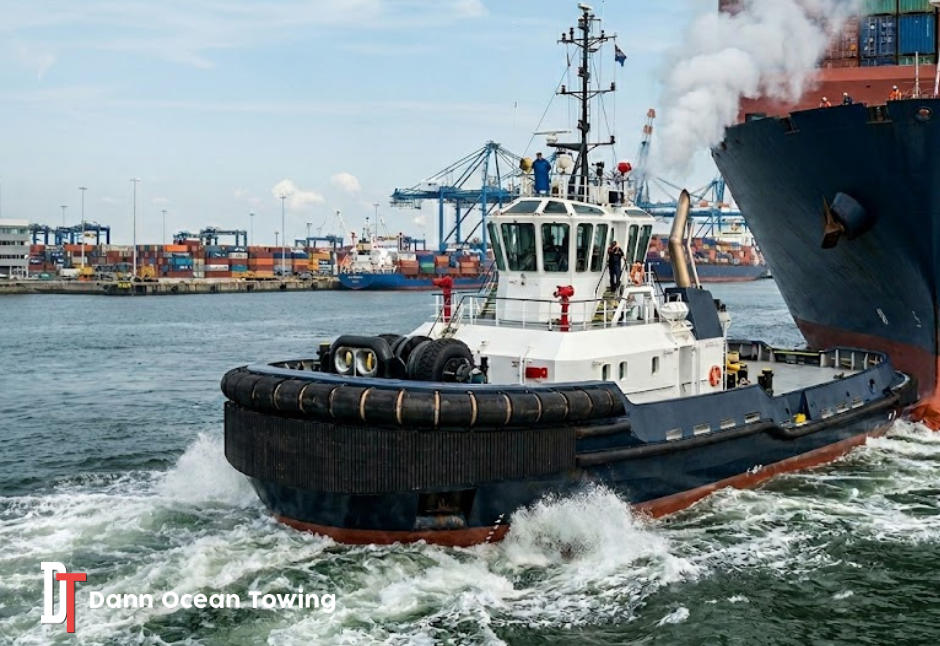
Tugboats provide the necessary power and precision to move massive vessels through restricted waterways. These high-performance boats are essential for harbor navigation, ocean towing, and emergency response. By using specialized propulsion and high bollard pull ratings, tugboats prevent groundings and collisions, maintaining the flow of global trade and protecting the marine environment from accidents.
Tugboats are the backbone of logistics and safety in the maritime industry. While cargo ships continue to grow in size, the physical limits of ports and channels remain largely the same. This creates a reliance on specialized towing vessels to bridge the gap between open-water transit and safe berthing.
Understanding how these powerful machines operate is vital for anyone involved in marine construction, shipping, or offshore logistics.
What defines a modern tugboat?
A tugboat is a relatively small but exceptionally powerful vessel built to move ships that cannot maneuver on their own in tight spaces. Unlike standard transport boats, a tugboat is essentially a floating engine room. Every design choice focuses on power-to-weight ratios and the ability to apply force in multiple directions.
Modern tugs feature Azimuth Stern Drive (ASD) or tractor propulsion systems. These allow the boat to rotate 360 degrees nearly instantly.
This agility is what makes marine towing possible in crowded harbors where a massive tanker has only a few feet of clearance on either side.
How does tugboat towing improve port safety?
Safety in a port depends on controlling the momentum of large vessels. A loaded container ship can take miles to stop using its own engines. Tugboats act as external brakes and steering systems. By pushing against the hull or pulling via a towline, they neutralize the effects of wind and current.
Without these services, the risk of a vessel striking a pier or running aground increases. Groundings do more than damage the ship; they can block a channel for days, costing millions in lost trade.
Marine towing professionals use their knowledge of local tides and depths to shepherd these giants to their berths without incident.
Why is ocean towing different from harbor assist?
Ocean towing involves moving disabled ships, barges, or oil rigs across open water for long periods. While harbor tugs focus on quick bursts of maneuverability, ocean-going tugs focus on endurance and stability.
These vessels are larger and built with higher bows to handle heavy seas. They carry massive amounts of fuel and use heavy-duty winches with thousands of feet of steel wire. Maintaining a steady tow at sea requires a skilled crew to monitor the “catenary,” the curve of the towline that acts as a shock absorber against the waves.
When are emergency tow services required?
A ship becomes a liability the moment it loses propulsion or steering. In these cases, emergency tow teams are the first line of defense. If a vessel drifts toward a rocky shoreline or a sensitive reef, a tugboat must intercept and secure it quickly.
These missions often happen during the worst possible weather. Tug crews must be able to establish a connection to a dead ship in high winds and rolling swells.
This quick action prevents hull breaches and catastrophic oil spills, making tugs a primary tool for environmental protection.
Why use tugs for marine construction and dredging?
In the world of marine construction, equipment like dredges and crane barges rarely have their own engines. They must be positioned with extreme precision to hit specific GPS coordinates for digging or pile driving.
Tugboats provide the “shift assist” needed to move this heavy equipment as the job progresses. They also handle anchor handling tasks, setting and pulling the massive anchors that keep construction platforms steady in the current.
FAQs
What is bollard pull in tugboat towing?
Bollard pull is the measurement of a tugboat’s pulling power, similar to how a truck is rated by towing capacity. It represents the maximum horizontal force the vessel can exert on a stationary object at zero speed.
Can one tugboat move a large cargo ship?
It depends on the ship’s size and the environmental conditions. For massive tankers or container ships, ports often require two to four tugboats to ensure enough control against wind and side currents during docking.
How do tugs connect to the ships they tow?
Tugs use high-strength synthetic lines or steel cables. In harbor assist, they may push directly against the ship’s hull using heavy rubber fenders. In ocean towing, a long wire is used to keep a distance between the vessels.
Are tugboats used for salvage operations?
Yes. Tugboats are the primary vessels used in salvage to pull grounded ships off sandbars or tow damaged boats to a dry dock. Their powerful winches and engines are necessary for refloating heavy structures.
Contact Dann Ocean Towing for Marine Towing Services on the East Coast
Managing complex marine logistics requires a partner who treats your cargo as their own. With over 100 years of combined experience and a fifth-generation legacy of leadership, Dann Ocean Towing provides the expertise your project deserves.
Whether you need ocean towing, dredging support, or turnkey project management, our fleet is ready to deliver on time and on budget.
Contact Dann Ocean Towing today at 813-251-5100 to schedule a quote.